Classical KING
- 3.8
- Rating
- 100.00K
- Installs
- Free
- Price

 Analysis by App-foxy
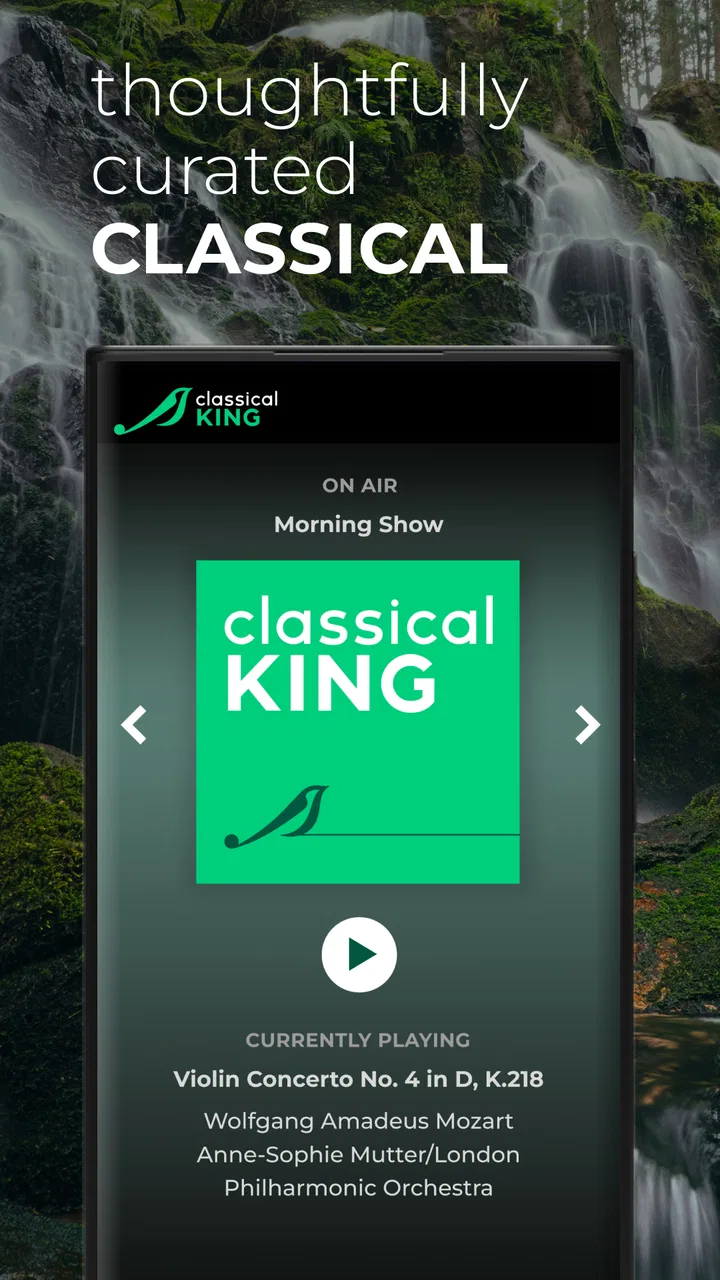
I approached Classical KING as a practical listening tool rather than just another radio app. It comes from Classical KING 98.1 and sits in the Music & Audio category, with a simple purpose: give me a dependable way to bring classical music into ordinary parts of the day. The app is free, rated for Everyone, and its focus is much narrower than a broad streaming service. That narrow focus is both its appeal and the first thing to understand before installing it.
My first impression was that this is best suited to someone who already wants classical programming, not someone searching for every possible genre, artist, playlist, or music-making feature. I would open it when I wanted a calm background for reading, cooking, commuting, or concentrated work, rather than when I wanted to build a carefully edited personal library. It feels more like tuning into a dedicated station than managing a large on-demand collection.
From a listening idea to a workable routine
The creative starting point with an app like this is not composing or editing audio inside the application. It is choosing the right atmosphere for a particular task. When I need music that supports an activity without demanding constant decisions, a focused classical station can be more useful than a huge catalog. I do not have to spend several minutes comparing playlists before getting started; I can open the app and let the station provide the direction.
You May Also Like

 AccuWeather: Weather Radar
AccuWeather Review: A Quick, Clear Forecast for Everyday Decisions
For everyday plans, the best forecast is the one you can understand quickly. AccuWeather makes rain timing, radar, and local conditions easy to act on, with a few trade-offs.

 Hill Climb Racing
Why Hill Climb Racing Still Turns Crashes Into One More Run
A tiny car, a bumpy hill and one more upgrade: Hill Climb Racing keeps resurfacing because its simple chaos makes every near-miss feel personal.

 AliExpress - Shopping App
AliExpress Makes Global Shopping Feel Personal, but Shoppers Bear the Risk
AliExpress turns a global marketplace into a pocket-sized discovery engine. Its reach is useful, its shopping loop compelling, and its trade-offs easy to miss.

 Lords Mobile: Kingdom Wars
Lords Mobile Is a Kingdom-Building Routine, Not a Quick Match
A case-by-case verdict on the building, battles, device demands, and social commitments that make Lords Mobile rewarding for some players and exhausting for others.

 PDF Scanner app - TapScanner
TapScanner Makes Paperwork Easier to Capture, Check, and Share
TapScanner makes scanning with a phone feel less like a rescue operation and more like a dependable step in getting work done. Its capture tools are useful, though not flawless.

 Block Blast!
 Shows How Much a Puzzle Game Can Leave Out
A quiet grid game shows why puzzle players increasingly value instant clarity, repeatable skill and low-pressure play—and where the genre still needs to catch up.
More From Our News Desk
View All News


That makes the app especially convenient in situations where attention is limited. For example, I might begin a morning by preparing breakfast while the stream plays, then leave it running while I answer messages or read. The value is in reducing the number of choices. Instead of treating music as a project of its own, I use it as part of the environment around another project.
The developer, Classical KING 98.1, gives the application a clear identity. This is not presented as a general audio hub with a classical section hidden among podcasts, pop stations, and spoken-word channels. The dedicated approach should appeal to listeners who want classical music to be the starting point every time. If your taste changes dramatically from one session to the next, that same focus may feel restrictive.
I also think this starting point works well for people who are new to classical music but do not yet know where to begin. A large catalog can be intimidating because it asks the listener to recognize composers, performers, periods, and recordings. A station-style experience removes some of that pressure. You can listen first and become more curious later, without needing to understand the entire vocabulary of the genre before pressing play.
There is a useful trade-off here: the app can help establish a listening habit, but it gives me less control than a service built around albums and playlists. If I have a precise request, such as hearing one particular recording in a particular order, a conventional on-demand service is likely the better tool. If my goal is simply to fill a room with classical music while I work, the focused approach is more natural.
How I would use it during an ordinary day
A realistic routine might begin with a short listening session while commuting. Later, I could return to it during a writing block, keeping the music at a level that supports concentration without turning the session into active music discovery. In the evening, it could provide a quieter background while I cook or tidy up. The important point is that each use starts from the same action: open the app, begin the stream, and let the programming carry the session.
That workflow is more valuable than it sounds. Many music apps are excellent when I am ready to browse, compare, save, and organize. They are less efficient when I only want a reliable stream immediately. Classical KING is aimed at that second situation. I would recommend it to someone who wants fewer decisions, especially if a dedicated classical station already matches their taste.
The store summary emphasizes high-definition classical streaming, anytime and anywhere. In practical terms, I would still treat “anywhere” as a convenience rather than a promise that every listening environment will be equally smooth. Streaming depends on the quality of the connection and the device being used. For a long trip or a location with inconsistent service, I would plan around that limitation instead of assuming uninterrupted playback.
That is one of the first questions a new user may have: is this a download-based music library or a live listening experience? I would approach it as a streaming app. It is suited to starting a session when connected, not to replacing a locally stored collection for every situation. If offline access is essential to your routine, a service designed around downloaded albums or playlists may fit better.
What the focused format changes
A dedicated station changes how I judge the app. I am not looking for the deep sorting tools, personal recommendation engine, or extensive library controls I would expect from a full music subscription. I am judging how quickly it gets me into the right listening mood and how well it stays out of the way afterward.
That simplicity can be a strength for shared spaces too. If I want classical music in a living room or small workplace, I can choose a focused source without handing someone else a complicated queue to manage. It is also approachable for listeners who may be uncomfortable with creating accounts, building libraries, or learning a large interface, although the exact experience will naturally depend on the current device and app environment.
On the other hand, the app is not the right starting point for a creator who needs to make music, edit recordings, publish a program, or manage an audio production from idea to delivery. The editorial angle matters here: I can use it as an input for inspiration, but not as a production workspace. Someone developing a soundtrack, podcast, lesson, or composition would need separate tools for recording, arranging, editing, rights management, and export.
Making, refining, and handing off a listening session
I find the handoff point useful because it clarifies what this stream can—and cannot—carry into another task. I’d use it to set a mood or keep a work session moving, then switch to a more controllable source whenever a project needs exact selections or a finished audio file. That distinction leads naturally to how I’d use the stream as creative material.
Using the stream as creative material
Although Classical KING is not a creation suite, it can still play a useful role in a creative process. I might use the stream to establish a pace for sketching, drafting, studying, or brainstorming. Classical music can be helpful when I want an atmosphere that is more varied than silence but less distracting than familiar lyrics. In that role, the app becomes part of the setup stage for creative work.
The practical advantage is that I do not need to prepare a playlist before beginning. I can start the stream, put the phone aside, and move into the actual task. That separation is useful when I am trying to protect a short period of concentration. The music is not the output; it is the environment that helps me reach the output.
There is also a subtle benefit for people who tend to over-edit their listening choices. A personal playlist can become another thing to perfect: the order, transitions, length, and mood all invite adjustment. A station removes much of that temptation. If I notice that I spend more time choosing music than doing the work, the app’s focused format may be a better fit than a highly customizable alternative.
At the same time, I would not use it when the music needs to follow a precise emotional arc. A video editor, theater producer, or game designer often needs exact timing and repeatable selections. A stream is too fluid for that kind of handoff. I would use it for broad inspiration, then move to properly licensed, controllable audio inside the relevant production tool.
Iteration without turning listening into maintenance
Iteration in this context means adjusting my routine rather than editing the audio itself. I can change when I listen, how long I leave the stream running, and which activities benefit from a dedicated classical background. This is a low-effort way to test whether the format genuinely improves focus or simply becomes noise.
One useful experiment is to compare two similar work sessions: one with the stream playing quietly and another in silence. I would pay attention to whether the music helps me remain engaged, especially during repetitive tasks, or whether it pulls my attention toward the phone. If the latter happens, I would start the stream and place the device out of reach. The app works best when it supports the routine without inviting constant checking.
Another practical adjustment is to treat the stream differently depending on the activity. During reading, I may prefer a lower volume and fewer interruptions from my own device. During household tasks, I may want the music to be more present. Since the app’s main value is immediate access to classical programming, the surrounding routine matters almost as much as the application itself.
This is also where expectations should stay realistic. I would not assume that a station-style app will learn my preferences as precisely as a personalized subscription service. If a particular piece or performer matters to me, I would use a catalog-based alternative alongside this app rather than expecting the station to become a custom library. The trade-off is clear: less setup and less control.
What happens at the handoff
The “export” stage is the point where this app has the clearest boundary. It is not a tool for exporting an edited mix, saving a finished audio file, publishing a playlist, or delivering a production package. If I am creating something for another person, I would not treat the stream as the final asset. Instead, I would use it as a listening reference or background source while the actual work happens elsewhere.
That distinction matters for students, content creators, and professionals. A student can use the app while outlining an assignment, but the app does not turn that session into a shareable project. A video creator can listen while assembling a rough cut, but the final soundtrack requires a separate workflow. A teacher can use classical music to shape a classroom atmosphere, but any formal presentation or recording would need its own approved materials and tools.
For a simple personal handoff, such as telling a friend about a classical station worth trying, the app is easy to explain because its purpose is so direct. I would describe it as a free way to access Classical KING 98.1 on a mobile device, not as a replacement for a full music-management system. That honest description prevents disappointment and helps people choose it for the right reason.
Device fit, access, and everyday friction
The application has been available since June 1, 2011, and its current version is 7.0.8. It supports devices running operating system version 11 or later. For me, that makes the minimum system requirement an important installation check before recommending it to someone with an older phone or tablet. A free app is not especially useful if the device cannot install the current release.
The app has reached over one hundred thousand installs, which suggests that it has found a real audience beyond a tiny group of station regulars. Its average rating is 3.8 from around five hundred ratings, with more than one hundred written reviews. I read that as a sign of a generally useful but not universally perfect experience. I would install it with sensible expectations: the core idea is appealing, while the quality of the day-to-day experience can depend on device compatibility, connection stability, and how closely the station format matches my habits.
Because it is free, the decision to try it is relatively easy. I do not have to commit to a paid subscription just to discover whether a dedicated classical stream belongs in my routine. That is particularly helpful for occasional listeners. Someone who listens to classical music only during study sessions may get enough value from this focused app without needing the broader features of a premium catalog.
Still, free access should not be confused with unlimited control. I would choose a conventional streaming service when I need offline listening, a specific album, a repeatable queue, or a personal collection that I can organize over time. I would choose a radio-style experience like this when I want the opposite: immediate programming with minimal preparation.
Who should install it, and who should look elsewhere
I would recommend Classical KING 98.1 to listeners who already enjoy classical music and want a straightforward mobile stream. It also makes sense for people experimenting with the genre, workers who prefer non-lyrical background music, and households that want a dedicated classical source without paying first. Its Everyone age rating makes it approachable for a broad audience.
I would be more cautious about recommending it to listeners who expect a large on-demand catalog. If your usual question is “Can I play this exact recording now, save it for later, and listen without a connection?”, a different kind of music service is likely to serve you better. Likewise, collectors who care about metadata, album sequencing, multiple performances, and careful library organization may find this app too limited as their only music tool.
It is also not the right choice for professional audio production. The app can inspire a mood, but it does not replace a digital audio workstation, a field recorder, a publishing platform, or a rights-cleared music library. That is not a flaw in its intended purpose; it is simply the boundary between listening and making. I would keep those roles separate rather than forcing the app into a workflow it was not designed to handle.
My verdict after fitting it into a real routine
Classical KING works best when I stop asking it to be more than a dedicated classical listening app. Its strength is the short path from wanting music to actually hearing it. I can use it as a calm starting point for a work session, a background stream for daily tasks, or an easy introduction to classical programming without first building a personal library.
The most useful insight is that its simplicity is not merely a lack of features; it can be a deliberate advantage for listeners who want fewer decisions. I would use it when I need atmosphere, continuity, and a classical focus. I would move to a broader service when I need selection, downloads, exact playback, or long-term organization.
As a free Music & Audio app from Classical KING 98.1, it offers a low-risk way to test whether station-based listening fits your life. The 3.8 average and established install base suggest a solid but not flawless experience, so I would judge it by the reliability of the stream and the convenience of the routine on my own device. The key trade-off is simple: immediate classical programming in exchange for less personal control.
For my own use, that trade-off is worthwhile when I am reading, writing, cooking, or trying to settle into focused work. I would not make it my only music application, and I would not use it as a creative production or delivery tool. But as a focused, free way to bring Classical KING 98.1 into everyday listening, it has a clear purpose and meets it without unnecessary complication.
FAQs for Classical KING
01What is Classical KING and how is it played?
Classical KING is a traditional trick-taking card game designed for players who enjoy strategic, turn-based gameplay. The app recreates the classic King card game format, where players compete through several rounds with different objectives and scoring rules. Before downloading, users should understand that success depends on planning, remembering played cards, and adapting tactics rather than relying only on luck.
02Can I play Classical KING offline?
Classical KING is suitable for users who want to enjoy a card game without needing a constant internet connection, although the exact availability of offline features may depend on the version installed and the device being used. Offline play is especially convenient when travelling or when mobile data is limited. Online functions, updates, advertisements, or certain competitive features may still require connectivity.
03Is Classical KING suitable for beginners?
Yes, Classical KING can be enjoyed by beginners, but new players may need a little time to understand the different contracts, penalties, and scoring system used during a complete match. The interface is generally easier to follow once a few rounds have been played. Beginners should start patiently, read any in-game instructions, and focus on learning how each card affects the current objective.
04Does Classical KING include multiplayer or computer opponents?
Classical KING is primarily designed to reproduce the experience of playing against opponents, which may include computer-controlled players depending on the edition and available modes. Some versions can also provide additional competitive or local options. Because features may vary between Android and iOS releases, it is advisable to check the store description before downloading if playing with friends or online opponents is important to you.
05Are there advertisements or in-app purchases in Classical KING?
The presence of advertising and optional purchases can vary according to the platform, region, and version of Classical KING. Many free card-game applications use advertisements to support development, while some may offer paid options to remove them or unlock extra features. Users should review the Google Play or App Store listing and the permissions requested before installing, particularly if they prefer a completely ad-free experience.
Pros
- Faithfully recreates the familiar Klondike solitaire experience.
- Simple controls make it easy to play with one hand.
- Short rounds are convenient for quick breaks.
- Clear card layouts remain readable on smaller screens.
- Relaxing gameplay suits casual
- low-pressure sessions.
Cons
- Limited variety may make the experience repetitive over time.
- Some deals can feel dependent on luck rather than strategy.
- Progression and rewards may lack depth for dedicated players.
- Small interface elements can be awkward on certain devices.
- Offline features and supported modes may vary by version.

Classical KING
Gallery